Đọc bản tiếng ViệtRead the English version
On reading the light, keeping the atmosphere, and knowing when to add something of your own.
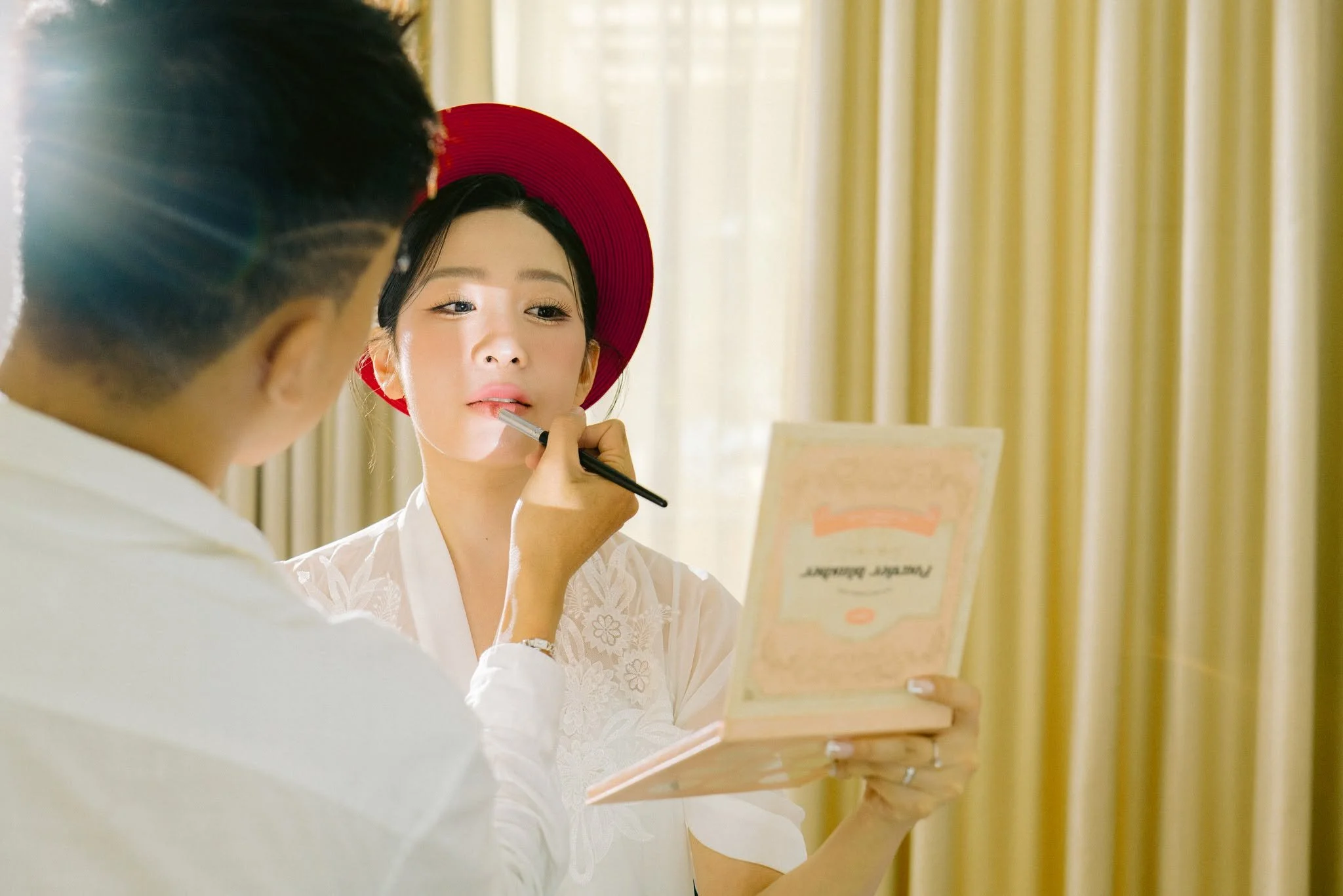
A wedding can move from a quiet bedroom to a sunlit courtyard, then into a room where coloured lights sweep across a dance floor. The people are still the same people. The light asks different things of us.
That is why I find it difficult to answer “Do you use flash?” with a simple yes or no. Before deciding, I want to understand what the light is doing. Can I see the gesture that matters? Does the photograph carry the feeling of being there? What would another source of light add, and what might it take away?
For me, documentary wedding photography begins with paying attention to what is happening and allowing people to live it. Choosing how to light a photograph is part of that responsibility.
1. Look before you add light
Available light means all the light already in the scene: daylight, a bedside lamp, candles, the DJ’s lights. It is a broader term than natural light. A photograph made without flash may still be shaped entirely by artificial lighting.
Before reaching for a flash, look for direction. Where does the light come from? Where does it fall away? A small turn of your own body can change a cluttered background into shadow, or reveal an expression you could not see a moment earlier. Moving yourself is often the first lighting decision.
A room does not need to be evenly bright to be photographed well. Darkness can give a face somewhere to emerge from. The question is whether the parts left in shadow help the photograph, or hide something we need to see.
2. When the existing light already says enough
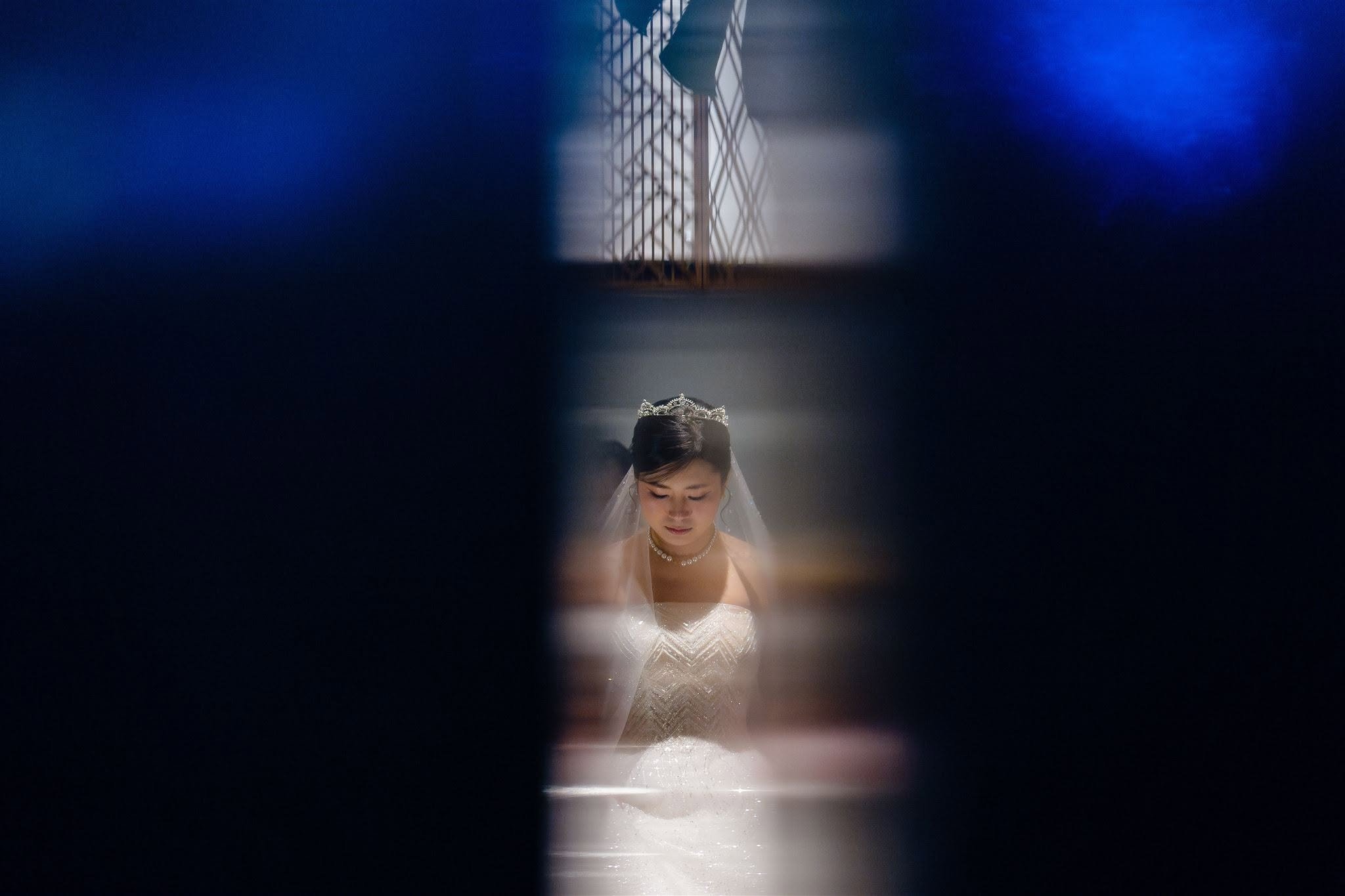
If the light gives me the expression, movement and atmosphere I need, I have little reason to change it. A quiet exchange beside a window can become less intimate if every corner is brought to the same brightness. Candlelight can lose its warmth when a much stronger, cooler source takes over.
But choosing available light also means accepting its limits. A slower shutter can blur a moving hand. A very wide aperture can leave one person in a group outside the depth of field. Raising ISO can help preserve shutter speed, but it cannot change an unhelpful direction of light.
I would rather accept some noise than sacrifice an important expression simply to keep ISO low. At the same time, “I only use natural light” should never become an excuse for missing something I had the tools and opportunity to photograph.

3. When flash earns its place
Flash can give a face separation from a busy background, bring a gesture into view, or make movement more legible in a dark room. It can also create a harder, more energetic feeling that suits a crowded party. It has a visual language of its own.
That does not mean the brightest face always makes the strongest photograph. I still want the people around it, the room and the relationships between them to matter. A light that isolates the couple beautifully can also erase the guests whose reactions complete the story.
The test is practical: does adding light make the important parts of this moment easier to feel and understand? If it mainly makes my lighting technique more noticeable, I need to think again.
4. Keep the room in the photograph
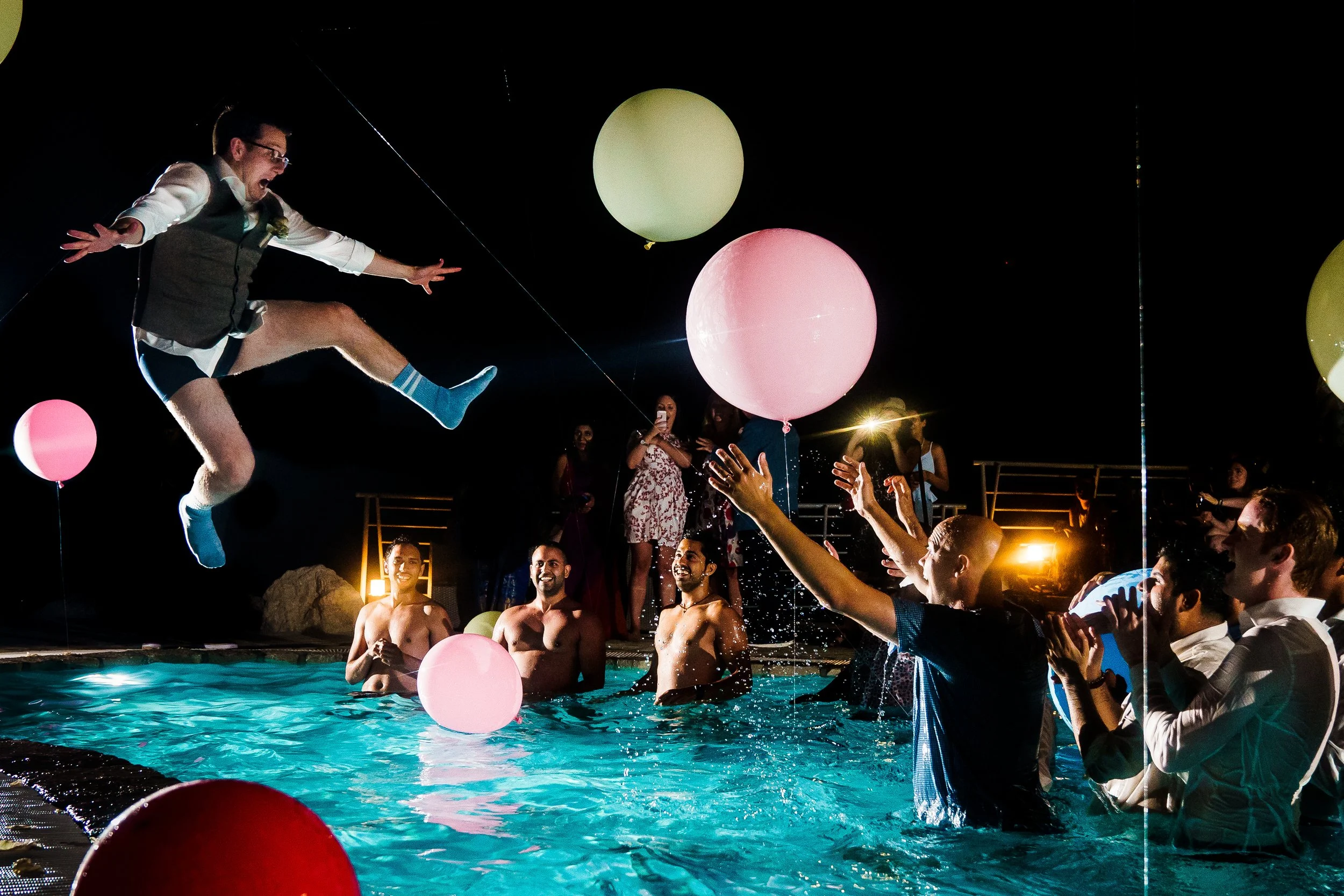
Think of a flash photograph as two exposures sharing one frame: the light already there and the light you add. Decide how much of the room you want to keep, then introduce enough flash for the people you need to see.
In ordinary single-pulse flash at or below the camera’s sync speed, with manual settings and fixed flash output, changing shutter speed mainly changes the ambient contribution. Aperture and ISO affect both contributions. This shortcut does not apply in the same way to high-speed sync or when automatic settings change the exposure for you.
A useful exercise is to fix aperture, ISO and flash output, then change only shutter speed. Watch how the room appears or recedes. Try it before a wedding, so the relationship feels familiar when a moment happens.
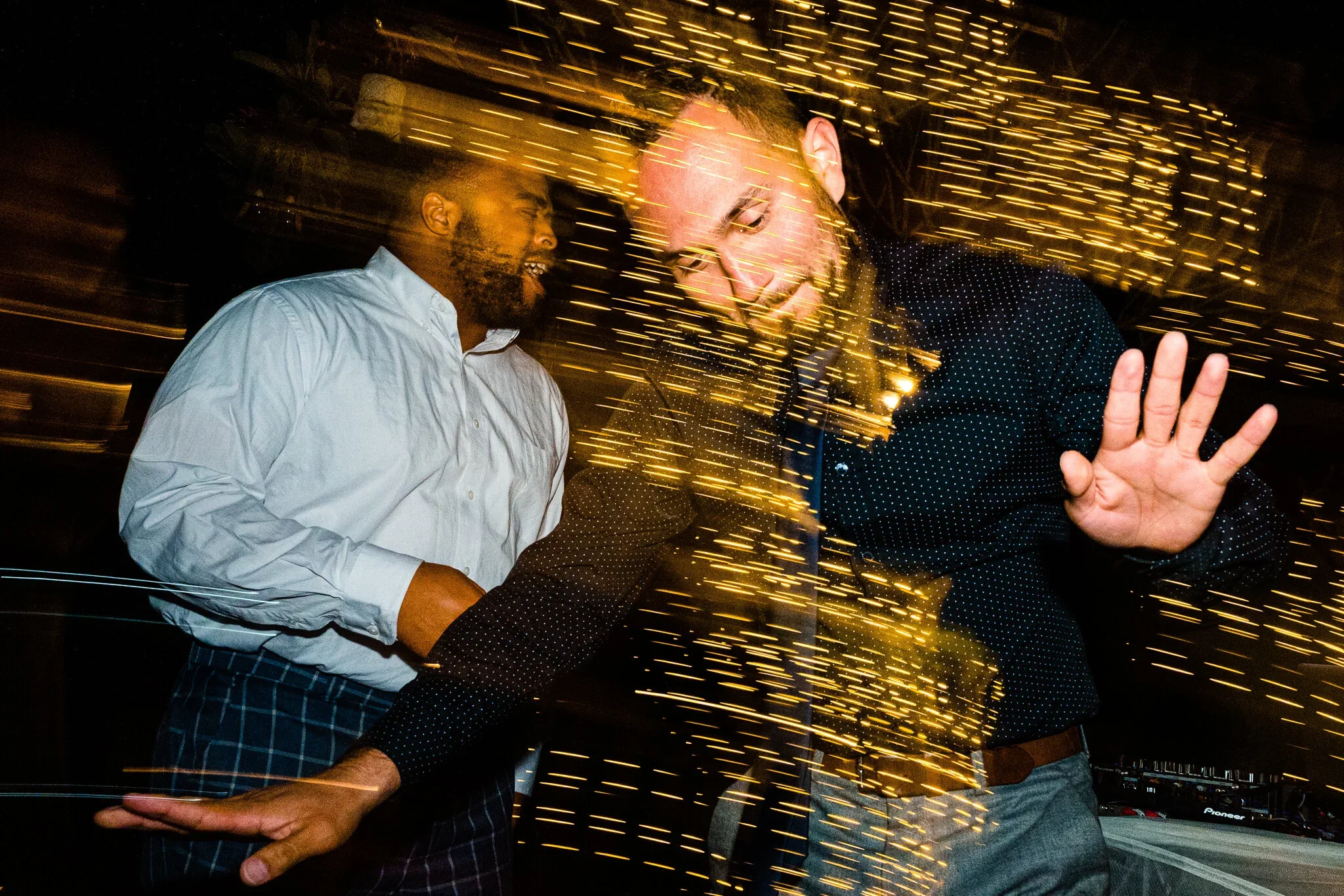
Remember that a short flash burst does not guarantee a sharp subject. If ambient light also records that moving person during a long exposure, a blurred trail or second outline can remain. Sometimes that movement adds energy. Sometimes it hides the expression. Choose deliberately.
5. Three ways to use flash, three different considerations
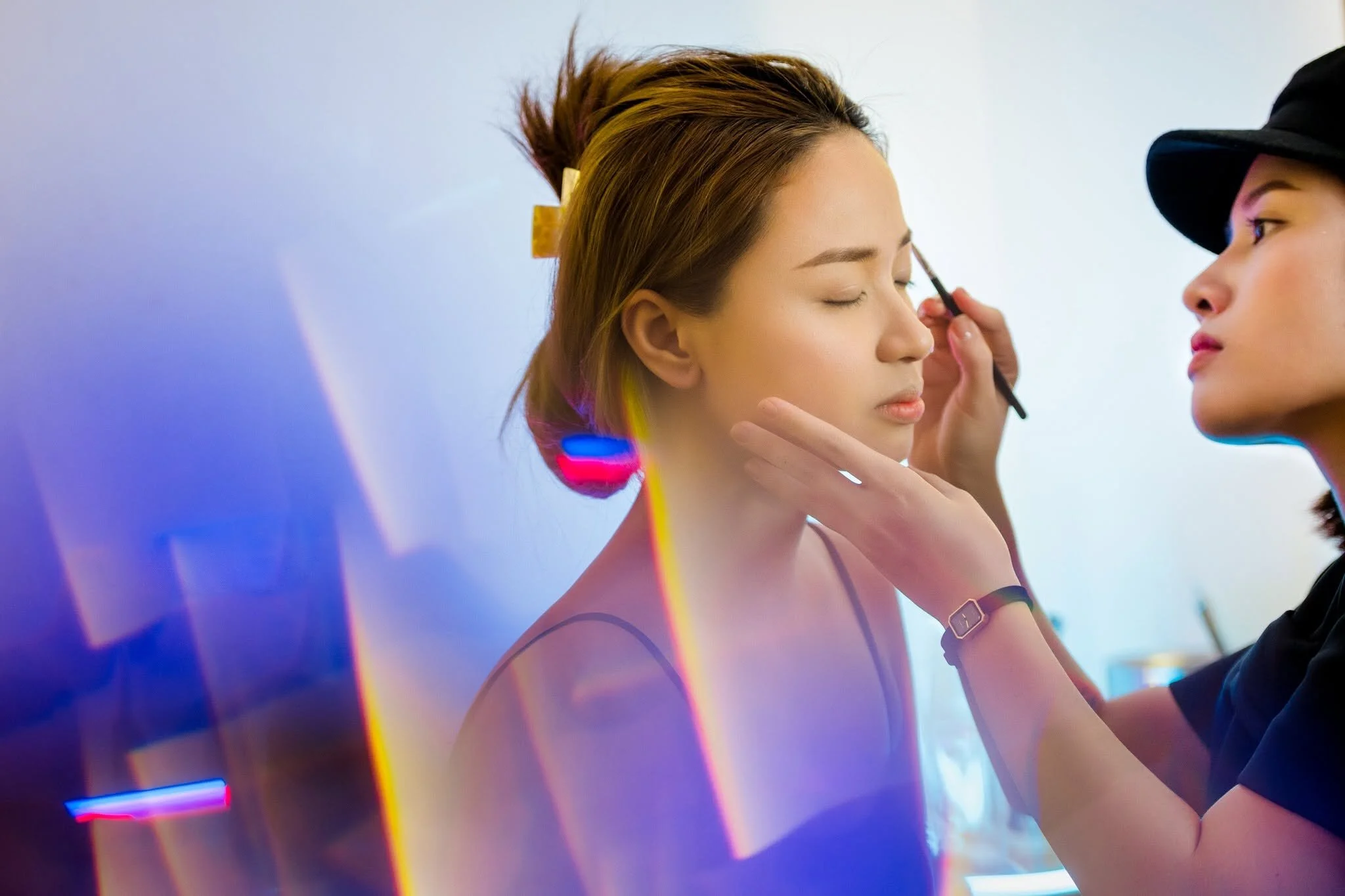
Bounce flash
A suitable nearby wall or ceiling can become a larger apparent light source when you bounce flash from it. Look at its colour, distance and direction. A dark ceiling may absorb too much light; a coloured wall can tint skin. Pointing the flash upward is only a starting gesture. You still have to see where the returning light goes.
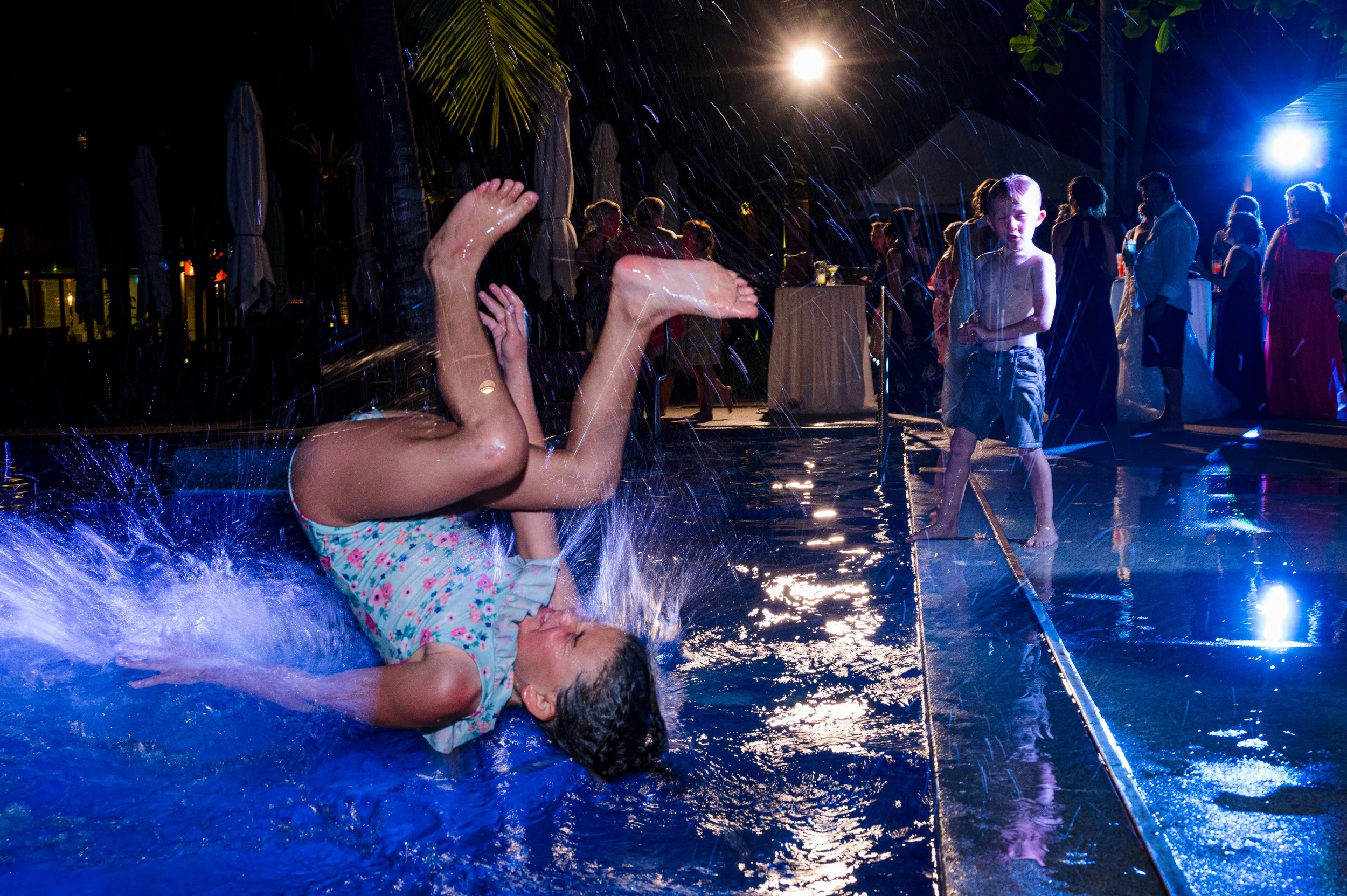
Direct flash
Direct flash can feel immediate and lively, particularly close to the action. Pay attention to the distance between people and the brightness of the nearest face. Someone close to the flash can become much brighter than someone a few steps behind. Its harder shadows and reflections should belong in the picture you are trying to make.
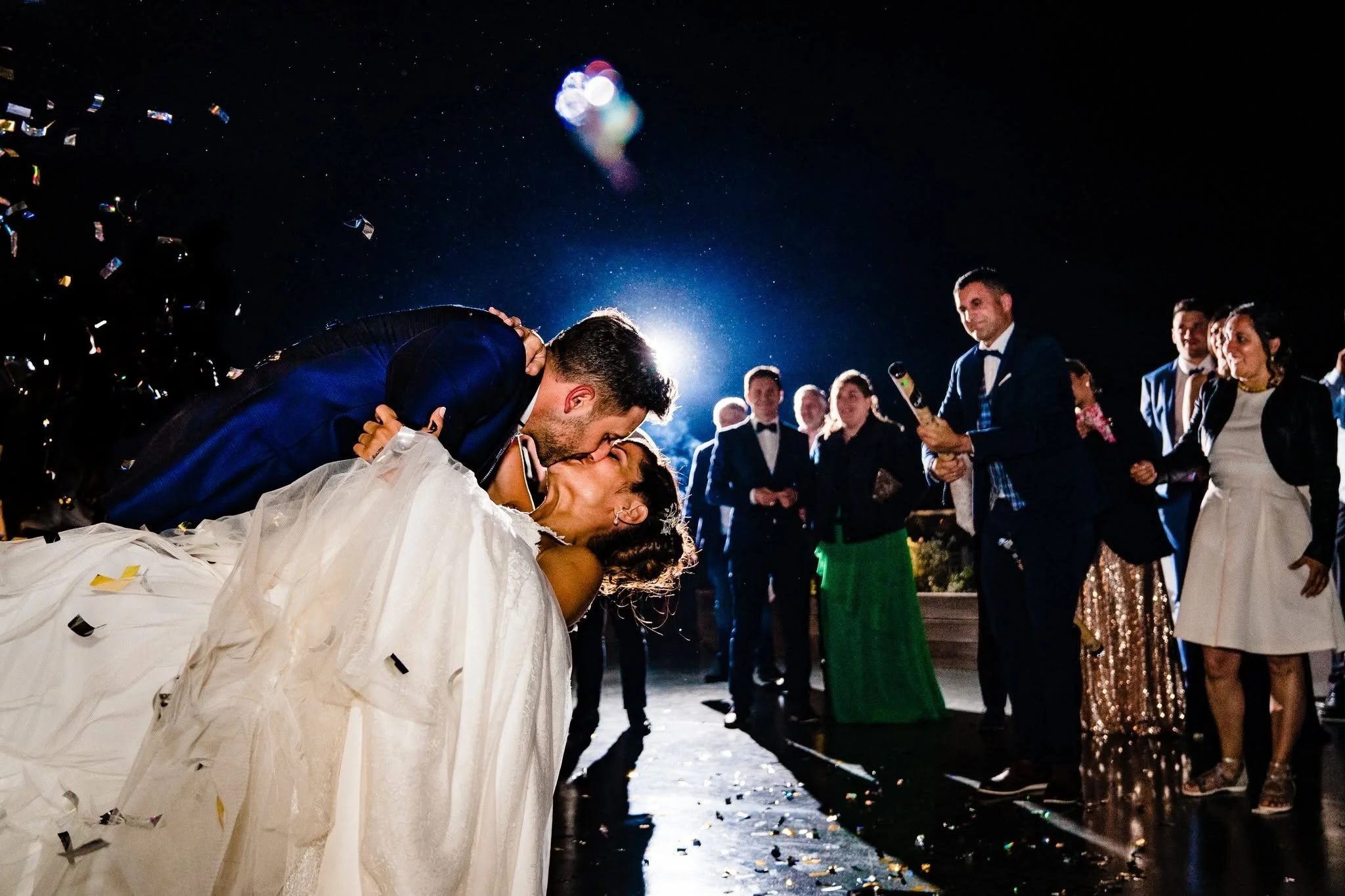
Off-camera flash
Moving the light away from the camera gives you another way to shape direction and separation. It also creates practical demands: anticipating where people will move, keeping equipment out of their way, and avoiding a setup that only works from one position. I want to be able to follow a moment rather than wait for it to enter a lighting diagram.
6. The experience belongs to the people in the room
A burst of light can draw attention. During a quiet ceremony, that may matter more than it does in the middle of a dance floor. Check the ceremony’s rules, speak to the people responsible, and notice how guests respond.
Being considerate is also a technical skill. Prepare settings before the moment, avoid unnecessary test bursts, and choose positions that let people stay involved in what they came to experience. A photograph matters, and so does the experience of making it.
Before pressing the shutter
I come back to three questions: What needs to be seen? What feeling should remain? What will my choice of light change? The answers may lead me to use a window, accept a darker frame, move a few steps, or turn on a flash.
Years later, I hope the people in these photographs recognise the night: the room, the closeness, the laughter, the way it felt to be surrounded by their people. That is what I want my decisions about light to serve.
Đọc ánh sáng, giữ không khí và biết khi nào cần thêm một nguồn sáng vào câu chuyện.
Một ngày cưới có thể bắt đầu trong căn phòng ngủ yên tĩnh, đi qua khoảng sân đầy nắng rồi kết thúc giữa sàn nhảy với những vệt đèn màu quét liên tục. Vẫn là những con người ấy, nhưng mỗi nơi lại đặt người chụp trước một quyết định khác về ánh sáng.
Vì vậy, khi được hỏi có dùng flash trong ảnh phóng sự cưới không, mình thấy khó trả lời chỉ bằng có hoặc không. Trước khi bật đèn, mình muốn nhìn xem ánh sáng đang làm gì với con người trong khung hình. Nó có cho mình thấy cử chỉ quan trọng không? Bức ảnh có giữ được cảm giác của lúc ấy không? Nếu thêm một nguồn sáng, mình sẽ làm rõ điều gì, và có thể vô tình đánh mất điều gì?
Với mình, chụp phóng sự cưới bắt đầu từ việc quan sát và để mọi người được sống trong ngày của họ. Chọn cách sử dụng ánh sáng cũng là một phần trách nhiệm của người ghi lại ngày ấy.
1. Trước khi thêm ánh sáng, hãy nhìn ánh sáng đang có
Ánh sáng có sẵn, hay available light, bao gồm tất cả nguồn sáng vốn đã hiện diện trong khung cảnh: ánh nắng, đèn đầu giường, nến, đèn sân khấu. Khái niệm này rộng hơn ánh sáng tự nhiên. Một bức ảnh không dùng flash vẫn có thể được tạo nên hoàn toàn từ ánh sáng nhân tạo.
Điều đầu tiên mình tìm là hướng sáng. Nó đến từ đâu, rơi vào đâu và tắt dần ở chỗ nào? Đôi khi, chỉ cần mình bước sang một bên, khuôn mặt đã nổi lên khỏi hậu cảnh lộn xộn. Có lúc, đổi góc đứng giúp mình thấy được biểu cảm mà ở vị trí cũ gần như chìm hẳn vào bóng tối. Quyết định đầu tiên về ánh sáng thường là di chuyển chính mình.
Một căn phòng không cần sáng đều để có ảnh đẹp. Khoảng tối có thể giúp ánh mắt người xem dừng lại đúng chỗ. Điều cần phân biệt là phần tối ấy đang giúp bức ảnh có chiều sâu, hay đang che mất một điều quan trọng mà mình cần ghi lại.
2. Khi ánh sáng có sẵn đã nói đủ
Nếu ánh sáng đang cho mình thấy được cảm xúc, chuyển động và không khí cần giữ, mình không có nhiều lý do để thay đổi nó. Một cuộc trò chuyện nhỏ bên cửa sổ có thể bớt riêng tư khi mọi góc phòng đều được làm sáng lên. Ánh nến có thể mất đi cảm giác ấm áp nếu bị một nguồn sáng mạnh hơn, lạnh hơn lấn át.
Nhưng lựa chọn ấy luôn đi cùng giới hạn. Hạ tốc độ quá chậm có thể làm nhòe bàn tay đang chạm vào nhau. Mở khẩu thật lớn có thể khiến một người trong nhóm không còn nằm trong vùng rõ nét. Tăng ISO giúp mình giữ tốc độ chụp, nhưng không thay đổi được một hướng sáng đang khiến khuôn mặt trở nên khó nhìn.
Mình sẵn sàng chấp nhận một ít nhiễu hạt để giữ được biểu cảm quan trọng, thay vì cố giữ ISO thấp rồi để khoảnh khắc trôi qua. Đồng thời, câu “mình chỉ chụp ánh sáng tự nhiên” cũng không nên trở thành lý do cho những gì mình đã có công cụ và cơ hội để làm tốt hơn.
3. Khi nào flash thực sự có ích?
Flash có thể giúp tách một khuôn mặt khỏi hậu cảnh đông đúc, làm rõ cử chỉ trong căn phòng tối, hoặc giúp người xem đọc được một chuyển động nhanh. Trong một buổi tiệc náo nhiệt, ánh sáng mạnh và dứt khoát của flash cũng có thể rất hợp với năng lượng của mọi người.
Tuy vậy, làm sáng mặt cô dâu chú rể chưa chắc đã đủ. Mình còn muốn thấy những người xung quanh và mối liên hệ giữa họ. Một nguồn sáng có thể làm hai nhân vật chính nổi bật, nhưng cũng có thể khiến những vị khách đang cười phía sau biến mất vào bóng tối. Khi đó, mình có nguy cơ giữ được nhân vật mà làm mất một phần câu chuyện.
Câu hỏi mình muốn đặt ra rất cụ thể: thêm ánh sáng có giúp những điều quan trọng trong khoảnh khắc này trở nên rõ ràng hơn không? Nếu thứ nổi bật nhất lại là cách mình đánh đèn, có lẽ mình cần cân nhắc lại.
4. Dùng flash mà vẫn giữ được cảm giác của buổi tiệc
Hãy hình dung một bức ảnh có flash gồm hai phần ánh sáng cùng xuất hiện: ánh sáng của căn phòng và ánh sáng mình thêm vào. Trước hết, hãy quyết định muốn giữ lại bao nhiêu không khí của nơi đó, rồi thêm lượng flash vừa đủ cho những người cần được nhìn thấy.
Với flash phát một xung thông thường, chụp trong giới hạn tốc độ đồng bộ của máy, khi thông số máy và công suất đèn được đặt tay cố định, thay đổi tốc độ màn trập chủ yếu làm thay đổi phần ánh sáng môi trường. Khẩu độ và ISO tác động đến cả hai phần. Cách hiểu nhanh này cần được xem lại khi dùng HSS hoặc khi chế độ tự động đang tự thay đổi thông số và công suất cho mình.
Một bài tập đơn giản là giữ nguyên khẩu độ, ISO, công suất flash, rồi chỉ thay đổi tốc độ màn trập. Quan sát xem căn phòng xuất hiện rõ hơn hay lùi dần vào bóng tối. Hãy thử trước buổi chụp, để khi khoảnh khắc đến, mình không phải vừa chụp vừa nhớ lại lý thuyết.
Cũng đừng mặc định có flash là chủ thể sẽ luôn nét. Nếu tốc độ chậm và ánh sáng môi trường vẫn đủ để ghi lại người đang chuyển động, bức ảnh có thể xuất hiện vệt nhòe hoặc đường viền bóng ma bên cạnh phần được flash ghi rõ. Có lúc điều ấy làm mình cảm nhận được sự chuyển động của buổi tiệc. Có lúc nó che mất biểu cảm. Sự khác biệt nằm ở việc mình có chủ đích và kiểm soát được kết quả hay không.
5. Ba cách dùng flash, ba điều cần quan sát
Đánh dội: hãy nhìn nơi ánh sáng quay về
Một bức tường hoặc trần nhà phù hợp ở gần có thể trở thành nguồn sáng biểu kiến lớn hơn khi mình đánh dội flash vào đó. Nhưng hãy nhìn cả màu sắc, khoảng cách và hướng của bề mặt ấy. Trần quá tối có thể hút mất nhiều ánh sáng. Tường có màu có thể làm da người bị ám màu. Xoay đầu đèn lên trên mới chỉ là thao tác bắt đầu; điều cần xem là ánh sáng quay lại khuôn mặt như thế nào.
Đánh thẳng: chú ý người đứng gần nhất
Flash trực tiếp có thể tạo cảm giác gần, mạnh và đầy năng lượng, nhất là khi mình ở giữa cuộc vui. Nhưng một người đứng sát đèn có thể sáng hơn rất nhiều so với người ở phía sau. Hãy nhìn khoảng cách giữa các nhân vật, vùng sáng trên mặt người gần nhất, bóng đổ và những bề mặt phản chiếu. Những đặc tính ấy cần phù hợp với bức ảnh mình muốn làm.
Flash rời: thêm hướng sáng, thêm việc phải tính
Đưa đèn ra khỏi máy cho mình thêm khả năng tạo hướng sáng và tách lớp. Đổi lại, mình cần tính vị trí mọi người sẽ di chuyển, chỗ đặt thiết bị và cả những góc chụp mà hệ thống ấy không còn hiệu quả. Mình muốn có thể đi theo khoảnh khắc, nên cách đặt đèn phải cho mình đủ tự do để làm điều đó. Thiết bị cũng cần được bố trí gọn, tránh lối đi và không cản trở khách.
6. Trải nghiệm của mọi người cũng nằm trong quyết định ấy
Một lần chớp đèn có thể khiến người ta chú ý đến máy ảnh. Trong nghi lễ yên tĩnh, ảnh hưởng ấy khác rất nhiều so với giữa sàn nhảy. Hãy tìm hiểu quy định của nơi làm lễ, trao đổi trước với người phụ trách và quan sát phản ứng của mọi người.
Sự tinh tế cũng cần được luyện tập như một kỹ năng. Chuẩn bị thông số từ trước, hạn chế những lần chớp thử không cần thiết và chọn vị trí để mọi người tiếp tục ở trong trải nghiệm của họ. Người chụp cần giữ được bức ảnh, đồng thời cũng cần nghĩ đến cảm giác của những người đang hiện diện trong bức ảnh ấy.
Trước khi bấm máy
Mình thường quay lại ba câu hỏi: Điều gì cần được nhìn thấy? Cảm giác nào cần được giữ lại? Lựa chọn ánh sáng của mình sẽ làm thay đổi điều gì? Câu trả lời có thể dẫn mình đến gần cửa sổ hơn, chấp nhận một khung hình tối hơn, bước sang vài bước, hoặc bật flash.
Nhiều năm sau, mình mong mọi người nhìn ảnh và nhận ra buổi tối của họ: căn phòng ấy, khoảng cách gần gũi ấy, tiếng cười ấy, cảm giác được ở giữa những người thân quen. Những quyết định về ánh sáng của mình cần giúp họ tìm lại được điều đó.
Technical reading / Tham khảo kỹ thuật: Canon — balancing flash and ambient light; Canon — flash settings and sync modes.
01 — CÚP ĐIỆN / ÁNH SÁNG ĐIỆN THOẠI — Edit → Replace để thay ảnh.
02 — TỐC CHẬM KẾT HỢP FLASH — Edit → Replace để thay ảnh.
03 — FLASH BOUNCE TƯỜNG — Edit → Replace để thay ảnh.
04 — FLASH ĐÁNH THẲNG — Edit → Replace để thay ảnh.
05 — FLASH RỜI — Edit → Replace để thay ảnh.